KIDS & THE DENTIST: THIER FIRST VISIT
At Le Dentistry in Holland, every single one of our staff members and doctors are committed to making sure your kid's first dental visit is a pleasant one! We do not just care for your child's teeth but we also want to make sure that they have a great start in their relationship with dentistry!
Bring your kids in for their first visit to tour our clinic before their appointment and find out what we do here. This will allow your kids to get used to the environment and be less scared! We love taking them around our clinic and allowing to become more at ease when they find out how fun their first appointment can be - showing them all the equipment we use, as well as how fun brushing can be!
Our dentists are trained to see kids and provide a wide range of paediatric care. However, if we find that your child has many problems or they need special attention, a specialist referral may be required. Nevertheless, let our dentists take a look to assess your child first.
“Little smiles, big magic! Where giggles meet gentle care, and every visit is an adventure in happy, healthy teeth!”
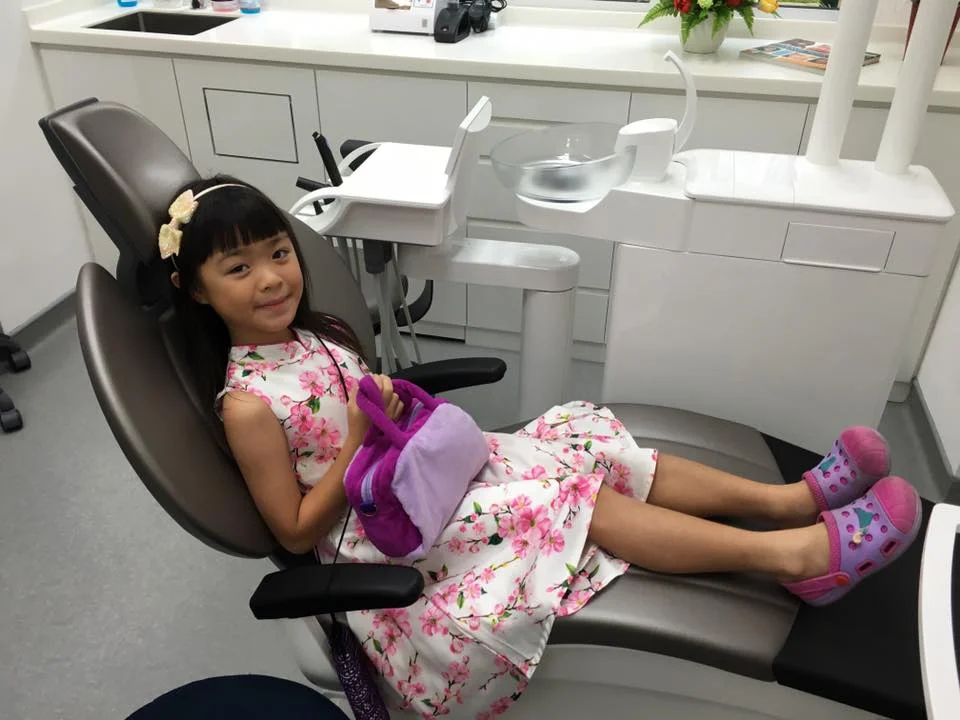
Why should I take my child to a dentist? The baby teeth are going to fall out anyway.
Your child's first set of teeth, the primary teeth, are extremely important. Strong, healthy primary teeth help your child chew food easily, learn to speak clearly and look good. Also, your child's general health can be affected if diseased and broken primary teeth are not treated early. Primary teeth also hold the spaces for permanent teeth to erupt into good positions. It is important that the first dental visit is pleasant, not anxiety-producing. Going to see the dentist only when child has problems does not allow this.
At What Age Should My Child First See a Dentist?
Ideally, it is best to take your child to the dentist when he /she is anywhere between 2-5 years of age. This allows the dentist to prevent and anticipate problems rather than treat them. In addition, the dentist will assess your child's caries risk, evaluate adverse habits and customize a program specific for each child.

How Should I Prepare My Child for His First Visit?
If you bring your child at an early age, your child will gradually learn that a dental visit is not a fear provoking experience. At an early age, the dentist can acclimatize your child to procedures such as examination using a mouth mirror, and tooth cleaning. Older children can accompany you when you see your dentist, so that you can be a model for appropriate behaviour. You can also read to your child. There are many children's books on visiting the dentist.
Important points before the first visit!
Don't:
Bribe your child into going to the dentist or use a dental visit as a punishment
Communicate your own fears to your child
Let anyone tell your child scary stories about dental visits
Do:
Be a role model to your child in terms of dental behavior, diet and oral hygiene
Accompany your child at least for the first visit instead of relegating this to relatives and caregivers
In making your first appointment, tell the dental staff about your child including any special needs or medical problems.
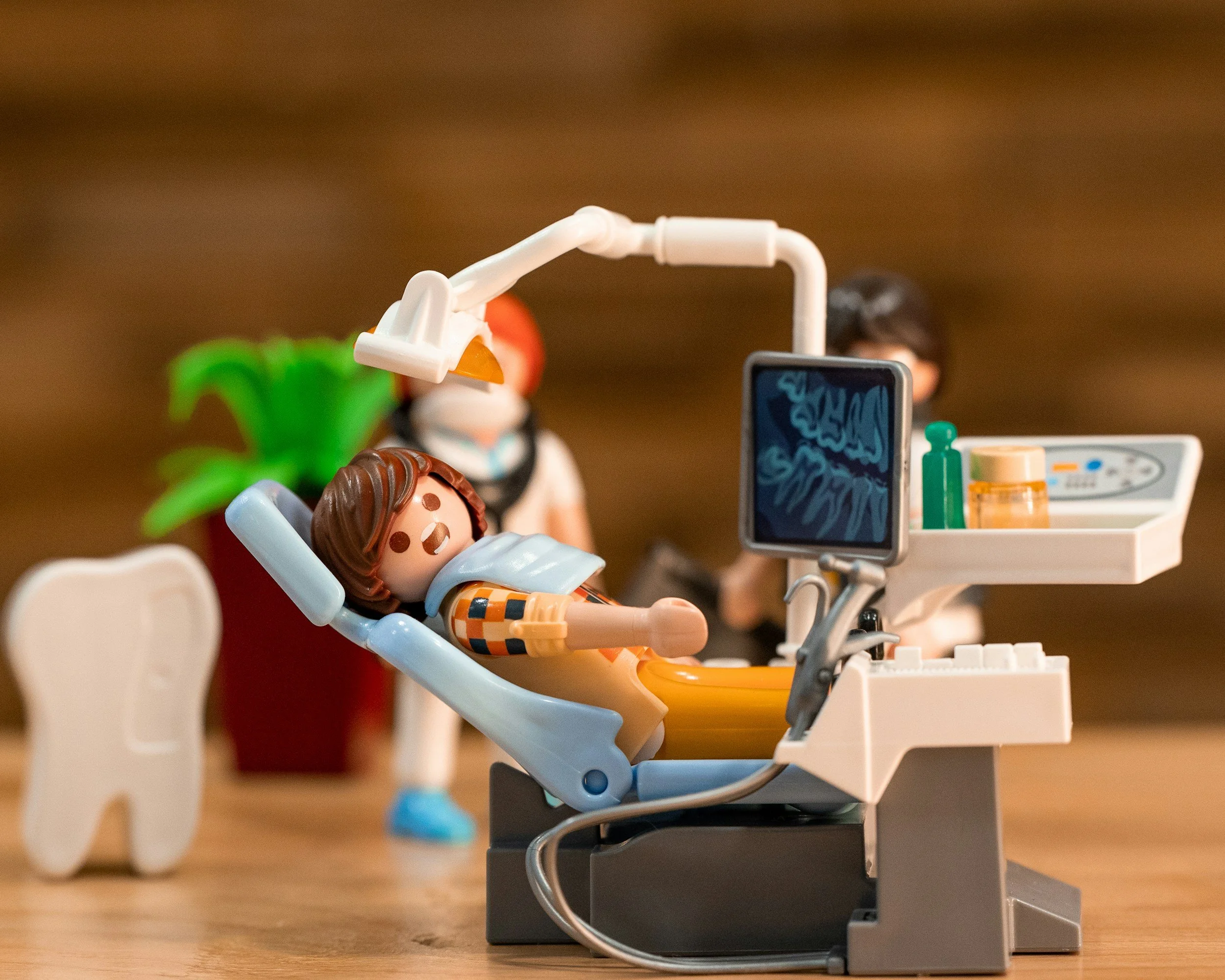
Pediatric Dental Emergencies: A Clinical Guide for Parents
Dental emergencies in children are rarely expected, but they demand an immediate, informed response. Unlike medical emergencies where a hospital is the default destination, dental emergencies often require specific, time-sensitive interventions that only a pediatric dentist can provide.
This guide outlines the most critical pediatric dental emergencies—from insidious conditions like severe early childhood caries to acute trauma such as avulsion—and provides the appropriate clinical steps for each.
Severe Early Childhood Caries (ECC): The Progressive Emergency
Often referred to as "milk bottle caries," severe Early Childhood Caries is a rapidly progressive form of decay affecting infants and toddlers. While not a sudden traumatic event, it constitutes a chronic emergency due to its potential for irreversible damage to the permanent dentition.
Pathophysiology: Prolonged exposure to fermentable carbohydrates (milk, formula, juice)—particularly during sleep—creates an acidic oral environment. This leads to rapid demineralization, typically beginning on the maxillary anterior incisors.
Clinical red flags requiring immediate evaluation:
White spot lesions along the gingival margin
Brown or dark discoloration encircling the cervical third of the crown
Visible cavitations or spontaneous nocturnal pain
Intraoral or facial swelling (indicating pulpal involvement or abscess)
Parental action: Discontinue all bottle or sippy cup use at bedtime except for water. If any of the above findings are present, schedule an urgent comprehensive examination. Do not wait for a routine six-month recall.
Avulsion of a Primary (Baby) Tooth: A Critical Distinction
Tooth avulsion—the complete displacement of a tooth from its socket—is among the most visually alarming emergencies for parents. However, management differs fundamentally between primary and permanent dentition.
For primary (baby) teeth, do not replant.
Reimplantation of an avulsed primary tooth carries a significant risk of injury to the developing permanent tooth bud, potentially resulting in enamel hypoplasia, dilaceration, or sequestration of the successor tooth.
Recommended immediate protocol:
Locate the tooth to confirm complete avulsion and rule out aspiration.
Control hemorrhage by having the child bite on sterile gauze for five to ten minutes.
Do not handle the root—hold the tooth by the crown if it requires examination.
Seek urgent pediatric dental evaluation to assess for retained root fragments, alveolar fracture, or contamination of the developing crypt.
Note for permanent teeth: In contrast, an avulsed permanent tooth should be gently rinsed (not scrubbed), replanted immediately into its socket, and held in place while rushing to the dentist. Time to replantation is the single most critical prognostic factor.
Other High-Priority Pediatric Dental Emergencies
Dental Luxation Injuries
Luxation refers to the displacement of a tooth without complete avulsion. This includes:
Extrusive luxation: Tooth appears elongated (pushed partially out)
Lateral luxation: Tooth displaced labially, lingually, or mesially (often with alveolar bone fracture)
Intrusive luxation: Tooth driven upward into the socket (a true orthopedic emergency)
Action: These injuries require radiographic evaluation to assess root position and proximity to the permanent successor. Do not attempt to manually reposition the tooth. Apply a cold compress for soft tissue swelling and present to a pediatric dentist immediately.
Odontogenic Infection / Dentoalveolar Abscess
A parulis ("gum boil") or facial swelling of dental origin constitutes a potential medical emergency. In children, the vascularity of facial tissues allows rapid progression to life-threatening conditions, including orbital cellulitis, cavernous sinus thrombosis, or Ludwig’s angina.
Indications for immediate care (ER or emergency dental visit):
Diffuse facial swelling, particularly involving the periorbital or submandibular space
Trismus (restricted mouth opening)
Fever or systemic symptoms
Respiratory difficulty or dysphagia
Parental action: Do not attempt to drain an intraoral swelling. Over-the-counter analgesics (ibuprofen or acetaminophen, dosed by weight) may provide interim pain relief, but definitive treatment requires source control—typically pulpectomy, extraction, or incision and drainage followed by antibiotics.
Mandibular Dislocation (Subluxation)
While less common in young children, adolescents may experience spontaneous temporomandibular joint dislocation, often precipitated by wide yawning, laughing, or dental treatment.
Signs: Inability to close the mouth, excessive salivation, and distress localized to the preauricular region.
Action: Do not attempt manual reduction at home. Apply moist heat to the masseter muscle to reduce spasm and proceed to an emergency department or pediatric dentist for controlled reduction.
Clinical Decision Guide: ER vs. Pediatric Dentist
When to go to the ER
Uncontrollable bleeding ✅
Loss of consciousness. ✅
Facial swelling affecting breathing/eyes ✅
Possible broken jaw ✅
When to go to the The Pediatric Dentist
Knocked out baby tooth ✅ (Next business day or urgent care clinic)
Knocked out permanent tooth ✅ (Immediately - call on the way!)
Severe toothache waking child up ✅
Broken wire from braces ✅
While acute injuries cannot be entirely prevented, the incidence of dental emergencies is significantly reduced by three evidence-based practices:
Custom-fitted mouthguards for any organized sport or recreational activity with fall risk (bicycling, skateboarding, gymnastics). Boil-and-bite guards offer superior protection to stock mouthguards; custom laminate guards from a dentist provide optimal fit and impact absorption.
Elimination of bedtime bottle feeding beyond twelve months of age, followed by tooth brushing after the final feed.
Parental modeling of safe oral behaviors—discourage using teeth as tools to open packaging, remove tags, or crack hard objects.
Conclusion
In pediatric dental emergencies, the distinction between appropriate and inappropriate intervention can have lifelong consequences for a child's dentition. When in doubt, contact your pediatric dentist immediately. Most practices maintain after-hours emergency lines for precisely these scenarios. A brief telephone consultation can guide your next step, prevent iatrogenic harm, and—when necessary—activate the urgent care pathway.
For emergencies during business hours, call our office directly. For after-hours concerns, our emergency line is available 24/7.
The Ultimate Prevention Checklist
While you can't prevent a soccer ball to the face, you can prevent 90% of dental emergencies with these habits:
No bottles in the crib. Finish feeding, then brush.
Mouthguards for sports. Not just football; get one for soccer, gymnastics, and skateboarding.
No "using teeth as tools." Kids love to open toys with their teeth or rip tags off clothes. Stop this habit now.
Keep your dentist’s after-hours number on the fridge. You don't want to be Googling "dentist near me" while your child is screaming.
Bottom Line: When it comes to baby teeth, the goal isn't to "save the tooth at all costs"—it is to protect the adult tooth underneath. Keep calm, follow the rules above, and when in doubt, call the dentist. A phone call takes 30 seconds; a permanent injury lasts a lifetime.
Have a specific question about your child’s smile? Never hesitate to call our emergency line. We are here for the bumps, the spills, and the sleepless nights.

“Brave smiles start here—with rainbow toothbrushes, ticklish toothpaste, and a dental chair that feels like a throne for our tiny superheroes!”